The Complexities of Multi-Vehicle Chain-Reaction Crashes
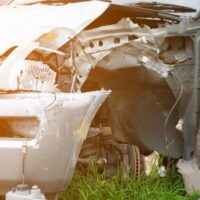
A rear-end collision involving two vehicles can be complicated enough. Add a third, fourth, or fifth vehicle, and determining what happened can become much more difficult.
Chain-reaction crashes are particularly challenging because one driver’s actions can trigger a sequence of collisions involving several people. Then, determining fault may require more than simply asking which vehicle hit which. If you were injured in a multi-vehicle crash, a Port St. Lucie Personal Injury Lawyer can help evaluate the circumstances.
The First Impact Isn’t Always the Whole Story
In a multi-vehicle accident, fault does not always belong entirely to one driver. Multiple drivers may share responsibility for causing or worsening the collision.
For example, imagine a driver traveling along a Port St. Lucie roadway suddenly stops in traffic. A vehicle behind that driver cannot stop in time and crashes into the rear of the first vehicle. A third driver then strikes the second vehicle, pushing it forward into the first.
Several questions immediately arise. Was the first driver negligent? Was the second driver following too closely? Was the third driver traveling too fast or distracted? Did road conditions, a mechanical problem, or another factor contribute?
Florida’s comparative negligence rules make fault allocation especially important. If more than one party contributed to an accident, determining each party’s share of responsibility can affect how damages are ultimately recovered.
An accident reconstruction professional may examine vehicle damage, photographs, debris, skid marks, and other evidence. The goal is to determine how the collision unfolded, including the sequence and force of the impacts. This is particularly important when drivers provide conflicting accounts.
Multiple Insurance Companies Can Mean Multiple Interests
A multi-vehicle crash may involve several insurance companies too. When that happens, it is possible each insurer will be investigating the accident from their own point of view.
One insurer may argue that another driver caused the collision. Another may contend that its policyholder was only pushed into the next vehicle and did not cause the initial impact. Meanwhile, an injured person may be trying to determine which available insurance coverage can address medical expenses, lost income, property damage, and other losses.
Important evidence may include:
- Photographs and video from the scene
- Vehicle damage documentation
- Police reports
- Witness contact information
- Traffic or surveillance camera footage
- Medical records
- Cellphone or vehicle data
- Statements from the drivers
Because evidence can disappear or become harder to obtain with time, preserving it early is advised.
Seasoned Port St. Lucie Personal Injury Lawyers know that the most visible impact may not tell the whole story. In a chain-reaction crash, what happened before that impact can be just as important as what happened afterward.
What questions do you have after a chain-reaction crash in Port St. Lucie, Fort Pierce, Stuart, and Vero Beach? Recovery is rarely as simple as identifying the vehicle that made the final impact. Understanding the sequence of events, allocating fault, and identifying available insurance coverage can require a detailed investigation. Reach out to Leifer & Ramirez to get a free case review. Call 561-660-9421 today.